Library
Cozy reading areas, research stations, and digital media rolls — a space for every kind of learner and every kind of work.
Common Grounds is built on flexibility, accessibility, and the belief that physical spaces shape how students learn. Every room, hallway, and gathering space is designed with intention.
We designed our school using preexisting buildings from St. Rose which used to be a college. The buildings vary from 2 to four stories high. We have outlined which buildings will be used for what:
Common Grounds repurposes the College of Saint Rose campus in Albany, NY. Buildings are color-coded by function: red for instruction and large projects, green for campus housing and flex space for projects, activities, and clubs, and blue for the campus center and community events.
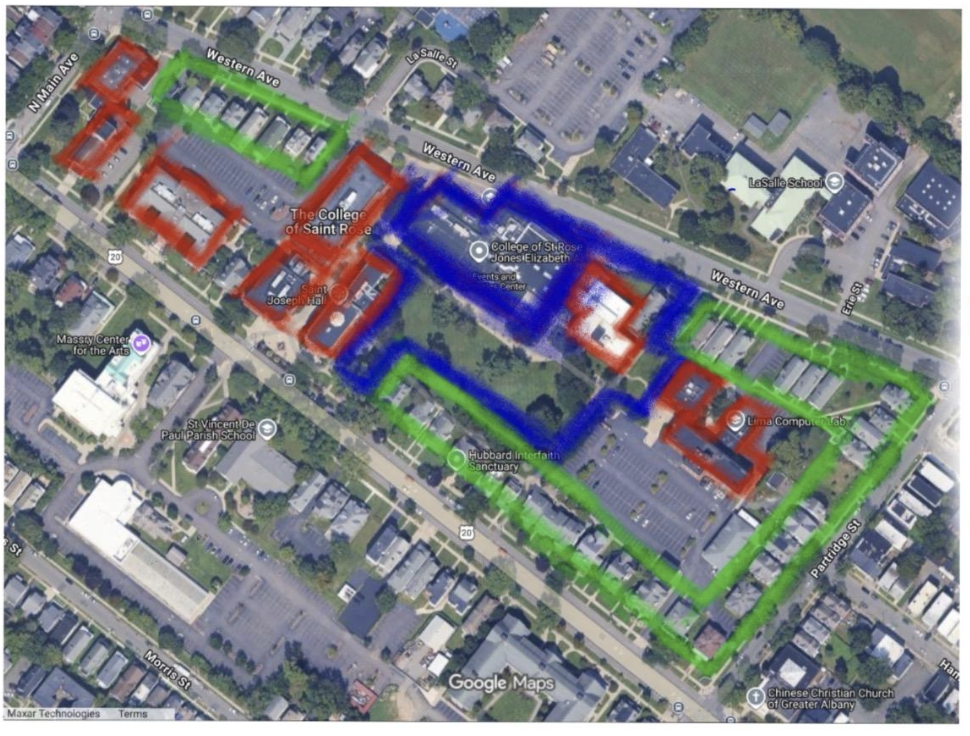
In our school we value flexibility and adaptability, so we encourage teachers to move their class if they feel it would benefit students' learning. If teachers want to teach outside or in a building with a different room layout, they can simply fill out a short form emailed to the office so everyone knows where each class is.
We designed our classrooms to all have small connecting rooms to use as support rooms when needed. We also have breakout spaces in each room for targeted instruction or sensory breaks.
Our teacher lounge was designed to have ample room for teachers to be able to do their planning and spend their time when not in class. We use movable chairs and tables to promote interaction and collaboration with our teachers (LSA Technology Services, 2020). We believe that we can all learn from each other and teachers are encouraged to help each other.
Cozy reading areas, research stations, and digital media rolls — a space for every kind of learner and every kind of work.
Designed like a community café with round tables for social interaction, quiet sections for students who need less stimulation, and a stage where students can perform.
Home to performances, monthly school assemblies, and student presentations — supporting voice, creativity, and public speaking skills.
The campus design philosophy extends into every classroom. This rudimentary classroom layout shows how these ideas work at the room level — clustered tables, decentralized teacher desks, a classroom library, and a connecting RISE/Support Room.
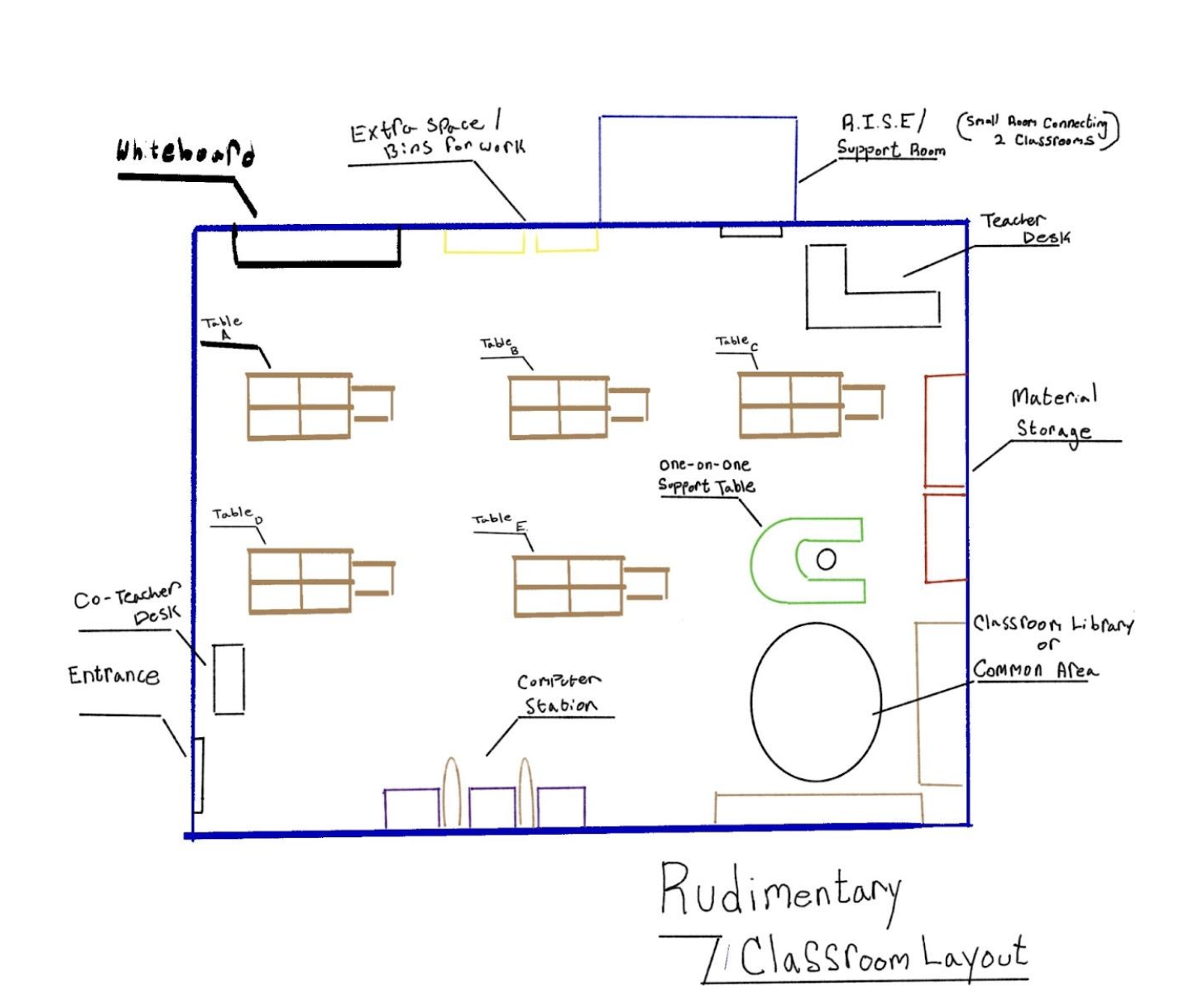
A typical classroom at Common Grounds is arranged with grouped tables in the center of the room so students can work collaboratively in clusters of four to six. Along one side of the room is a small-group teaching table where either the general education teacher or special education teacher can conference with students, reteach material, or provide extra support. At the front or center of the room, there is enough open space to quickly shift into a community circle or seminar arrangement with movable chairs. One corner of the room is designed as a quiet workspace for students who need lower stimulation or more independent focus. Shelving, materials, and technology are placed around the edges of the room so pathways stay open and physically accessible for all students. The overall design is flexible and mobile, reflecting the school's emphasis on co-teaching, inquiry, accessibility, and active student participation.
Learning spaces affect student engagement | U-M LSA LSA Technology Services. (n.d.-d). https://lsa.umich.edu/technology-services/news-events/all-news/teaching-tip-of-the-week/learning-spaces-affect-student-engagement.html